
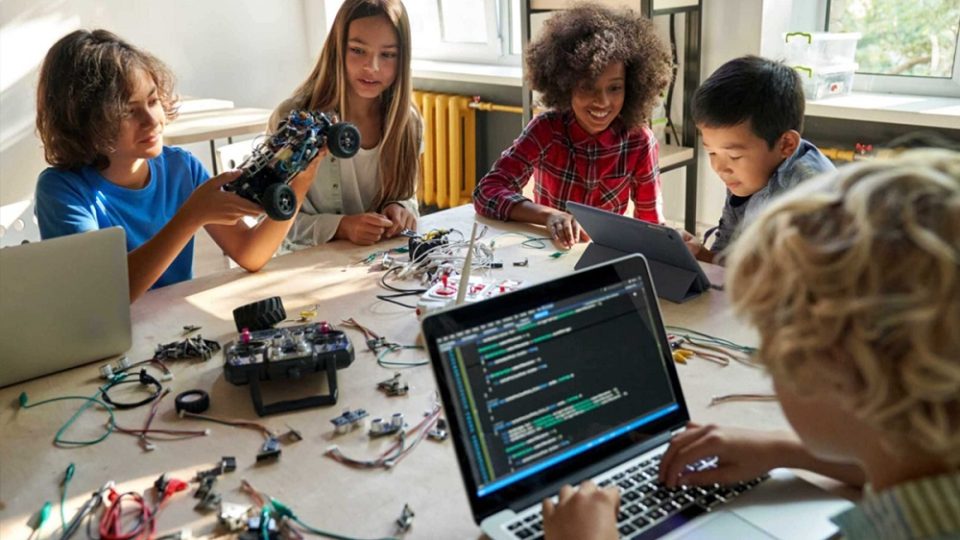
The modern global landscape is evolving at a rate unprecedented in human history. Breakthroughs in automation, computational intelligence, biotechnology, materials science, and clean energy are reshaping every sector of the international economy. In this rapidly shifting environment, traditional educational paradigms that emphasize isolated rote memorization, standardized test performance, and rigid subject silos are no longer sufficient to equip the next generation for sustainable professional success.
Science, Technology, Engineering, and Mathematics, collectively known as STEM education, represents a foundational shift in how students acquire, process, and apply knowledge. Rather than teaching these four academic disciplines as separate, compartmentalized subjects, STEM education integrates them into a cohesive, hands-on learning paradigm focused on real-world problem-solving. By cultivating computational literacy, analytical rigor, inventive thinking, and collaborative problem-solving, STEM programs prepare students to thrive in an increasingly complex and technologically driven future.
Understanding the Foundations of Integrated STEM Learning
To understand the transformative power of STEM, it is essential to distinguish between teaching science or mathematics in isolation and delivering an authentic, integrated STEM curriculum.
Traditional schooling frequently presents scientific formulas, geometric theorems, and coding syntax as abstract theoretical concepts. Students learn the definitions, complete isolated problem sets, and quickly forget the underlying principles once their examinations conclude. Integrated STEM learning fundamentally changes this dynamic by organizing the educational experience around authentic applications.
-
Interdisciplinary Synthesis: STEM dismantles arbitrary boundaries between subjects. A single engineering design challenge requires students to apply mathematical modeling, conduct scientific inquiry into physical forces, utilize software tools for digital design, and leverage technology for data analysis.
-
Inquiry-Based Frameworks: Rather than memorizing predetermined answers provided by a textbook, learners are presented with open-ended scenarios. They must formulate testable hypotheses, design empirical experiments, analyze collected data, and refine their conclusions based on measurable evidence.
-
The Engineering Design Process: Students are introduced to an iterative cycle of asking questions, researching possibilities, imagining solutions, building prototypes, testing real-world performance, and redesigning based on physical constraints. This iterative loop teaches students that failure is not an endpoint, but a vital source of practical feedback.
Cultivating Critical Thinking and Complex Problem-Solving
At its core, STEM education is not simply about training future software engineers or laboratory researchers. It is a comprehensive framework for teaching young minds how to think systematically.
The contemporary world is saturated with vast streams of unfiltered information. Success in modern society requires individuals who can evaluate evidence, spot logical fallacies, detect hidden biases, and separate empirical facts from subjective opinions. STEM coursework develops these analytical muscles through continuous practice.
Deconstructing Ambiguity
Real-world challenges rarely arrive with clean instructions or single right answers. Whether tackling urban traffic congestion, designing drought-resistant agricultural systems, or optimizing supply chain logistics, professionals must navigate incomplete data and conflicting priorities.
STEM curricula train students to break massive, ambiguous problems down into smaller, manageable component parts. Learners evaluate variables, identify operational bottlenecks, construct mathematical models to simulate potential outcomes, and design targeted interventions. This structured approach builds a high degree of cognitive resilience, allowing students to approach unfamiliar situations with curiosity and confidence rather than anxiety.
Bridging the Global Workforce Skills Gap
The modern labor market is undergoing a structural transformation. Automation and intelligent algorithms are rapidly displacing routine, transactional jobs, while demand for high-skill technical, analytical, and managerial talent continues to outpace supply.
-
Accelerated Job Creation in Technical Fields: Careers in cloud computing, cybersecurity, renewable energy engineering, biomedical research, data architecture, and robotics are expanding at multiples of the average job growth rate.
-
Higher Earning Potential and Economic Mobility: Positions requiring robust STEM competencies consistently offer higher starting salaries, greater job security, and more resilient career progression compared to non-technical occupations, providing a powerful vehicle for socioeconomic mobility.
-
Pervasive Cross-Industry Demand: Technical competence is no longer confined to traditional technology firms. Modern agriculture relies on precision drone mapping and soil telemetry; financial services depend on complex quantitative modeling; healthcare utilizes robotic surgical tools and genomic sequencing. STEM literacy has become an essential baseline qualification across virtually all dynamic industries.
Comparative Overview: Traditional Instruction vs. Integrated STEM Education
| Educational Dimension | Conventional Instructional Model | Integrated STEM Learning Paradigm |
| Instructional Delivery | Teacher-centric lecture, passive note-taking | Student-driven inquiry, hands-on experimentation |
| Subject Organization | Siloed periods for science, math, and computer lab | Interdisciplinary project modules mirroring real challenges |
| Knowledge Assessment | High-stakes memorization tests and multiple-choice quizzes | Performance portfolios, working prototypes, and data briefs |
| Approach to Failure | Penalized with deducted points and low marks | Embraced as an essential iterative step in design refinement |
| Skill Development | Individual task completion and passive compliance | Collaborative teamwork, systems thinking, and active communication |
| Practical Application | Abstract scenarios confined to textbook examples | Direct engagement with environmental, civic, and industrial issues |
Fostering Technological Fluency Beyond Digital Consumption
Today’s youth are widely described as digital natives because they interact with smartphones, video games, and streaming applications from early childhood. However, passive digital consumption is fundamentally distinct from true technological literacy.
Using an intuitive consumer app requires zero technical understanding of the algorithms, hardware architectures, or data structures operating beneath the screen. STEM education transforms students from passive consumers of digital products into active creators, architects, and governors of technology.
-
Algorithmic and Computational Thinking: Learning how to write code, design relational databases, and build logic trees teaches students how to structure logic, identify procedural errors, and understand how digital systems process commands.
-
Data Literacy and Statistical Interpretation: Students learn how to collect large datasets, clean messy data, identify meaningful statistical trends, and create clear visual charts that tell an accurate story without misleading the audience.
-
Ethical Technology Stewardship: By understanding the mechanics of automated algorithms, artificial intelligence models, and digital tracking networks, students are better equipped to evaluate ethical dilemmas surrounding digital privacy, algorithmic bias, and autonomous decision-making.
Developing Collaborative Teamwork and Adaptive Communication
A pervasive stereotype depicts scientific and technical work as an isolated endeavor carried out by solitary individuals in sterile laboratories. In reality, modern scientific discovery and technological innovation are deeply social, collaborative pursuits that require cross-functional teamwork.
STEM classrooms mirror modern professional working environments through project-based team structures.
-
Role Specialization and Mutual Accountability: When completing complex engineering or research challenges, students take on specific roles such as project manager, lead coder, hardware designer, or research lead. Every team member must deliver on their individual responsibilities for the overarching project to succeed.
-
Constructive Conflict and Negotiation: Diverse team members frequently propose competing design approaches to a single challenge. Students must learn how to present empirical arguments, use data to defend their choices, listen actively to alternative viewpoints, and negotiate functional compromises without personal hostility.
-
Translating Technical Concepts: High-level ideas are ineffective if they cannot be communicated clearly to non-specialists. STEM projects require students to present their technical findings, prototype demonstrations, and data summaries before diverse audiences, teaching them how to communicate complex concepts in accessible, persuasive language.
Cultivating Lifelong Curiosity and Environmental Stewardship
Beyond economic advantages and workforce readiness, STEM education instills a profound appreciation for the natural and physical world. When students understand the chemical cycles that regulate planetary climate, the biological mechanics of human health, and the physical laws governing motion and energy, their perspective on their surroundings expands.
This deep scientific literacy is critical for addressing existential global challenges, including climate change, renewable energy transitions, clean water accessibility, and public health management. Students grounded in STEM frameworks view these monumental issues not as insurmountable crises, but as tangible engineering, biochemical, and logistical challenges waiting to be solved through human ingenuity, empirical research, and persistent innovation.
Frequently Asked Questions
What is the difference between STEM and STEAM education?
STEAM education integrates the Arts into the traditional Science, Technology, Engineering, and Mathematics framework. Incorporating visual arts, design principles, humanities, and creative expression helps students develop aesthetic appreciation, human-centered design thinking, and creative problem-solving skills alongside rigorous analytical and technical competencies.
At what age should schools begin introducing STEM concepts to young children?
STEM learning can and should begin in early childhood education, starting in preschool and kindergarten. At this developmental stage, STEM does not require complex mathematics or coding; it focuses on hands-on exploration, building physical structures with blocks, observing plant growth, exploring water flow, and developing spatial awareness and natural curiosity through guided play.
How can school districts with limited budgets implement effective STEM programs?
Effective STEM instruction is driven by pedagogical methodology rather than expensive commercial equipment. Schools can build powerful hands-on design challenges using everyday household materials, recycled cardboard, basic craft supplies, and free, open-source software tools like block-based coding platforms and browser-based 3D modeling programs. The core value lies in the inquiry and iterative design process, not the cost of the tools.
Why is spatial reasoning considered a critical foundational skill within STEM fields?
Spatial reasoning is the cognitive capacity to visualize, manipulate, and mentally transform two-dimensional and three-dimensional objects. Strong spatial reasoning skills are directly correlated with success in architectural engineering, surgical techniques, computer-aided design, chemical molecular analysis, and advanced geometry.
How does STEM education encourage greater diversity and gender equity in technical careers?
Early, continuous exposure to hands-on STEM challenges demystifies technical subjects before cultural stereotypes take root. When female students and underrepresented minorities engage in successful robotics builds, scientific experiments, and coding projects in supportive classroom environments, they build authentic self-efficacy and are significantly more likely to pursue advanced technical degrees and leadership positions in technology sectors.
What are the main obstacles teachers face when transitioning to an integrated STEM curriculum?
The primary hurdles include rigid departmental schedules that segment school days into short subject blocks, standardized state testing requirements that focus exclusively on isolated multiple-choice recall, insufficient collaborative planning time for interdisciplinary teacher teams, and a lack of ongoing professional development for educators who were originally trained in traditional, single-subject pedagogies.
How can parents foster strong STEM thinking skills at home without a technical background?
Parents can nurture STEM mindsets by encouraging curiosity and asking open-ended questions about how everyday objects work. Rather than providing immediate answers, parents can ask children why they think a mechanical appliance functions, involve them in hands-on cooking measurements, conduct simple backyard nature observations, encourage tinkering with broken toys, and praise persistence and effort when children work through challenging puzzles.
